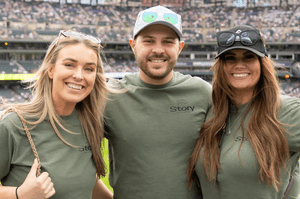
What It Actually Looks Like to Join a Real Estate Team in Denver
Every recruiting ad promises leads, culture, and a great split. Here's the version nobody publishes — built by a team that got it wrong twice before getting it right.
You're scrolling job boards at 11pm after a full day of showings that didn't convert. Or you're splitting your time between your real estate business and the other job that actually pays the bills right now. Or you've been solo for years and you're doing fine, technically — but "fine" stopped feeling like enough about six months ago.
Whatever version of that you are, you've probably started Googling what it looks like to join a real estate team in Denver. And every result is either a recruiting ad or a generic article that doesn't tell you anything real.
So here's the real version.
We built Story Home Group three times. Our founder Will Story had $700K in GCI in year two, seven agents on the roster, and a 7% profit margin.
"I was subsidizing people who weren't running. Two weeks before Thanksgiving, I let five of them go and started over. Not because they were bad people. Because the model was wrong."
Will Story, Founder — Story Home GroupEverything we learned from that rebuild — and the one before it — is baked into how the team operates today.
Why Most Real Estate Teams Fail Their Agents
We can say this because we've been one of those teams. Twice.
The first version of Story Home Group was Will building around whoever said yes. No structure, no onboarding, no accountability. Agents showed up, got a logo on their card, and figured it out alone. The second version had more people and more revenue but still no system. Will was covering the overhead and hoping newer agents would ramp. They didn't, because hope isn't a training program.
The third version — the one running now — is different because the operating system is different. Daily structure. Real training. Accountability with teeth. A culture that's built into the calendar, not just talked about at happy hour.
Most teams in Denver recruit the same way: they promise leads, mention the split, and ask you to sign. What they don't tell you is whether they have an onboarding system, whether anyone will coach you through your first listing appointment, or whether you'll still be driving Uber six months in because the "leads" were recycled contacts from 2019.
The difference between a team that gives you leads and a team that builds your career is the system behind the leads. If you can't see the system before you join, it probably doesn't exist.
What a Real Team Provides vs. What Gets Promised
Here's what Story Home Group actually offers — and what it doesn't.
- Full onboarding system built on the PLACE platform
- Script library with professionally recorded training videos — not a PDF someone emailed you
- AI marketing platform: open house materials generated from a Zillow link in 10 seconds
- Daily 8:30 AM power-ups with real-time coaching
- Weekly book club with skin in the game (Panera if you read it)
- Friday reflections: what went well, what was hard, what's your intention
- Will sits next to agents on the couch while they make calls
- A guarantee of a specific number of deals in year one
- A path that works without your effort
- Someone to drag you across the finish line
- A brokerage name on your card with nothing behind it
"The power-up isn't optional and the book club isn't a suggestion. If that sounds like a lot, it is. The first six months are hard. But the agents who commit to the rhythm stop needing their second job. That's the trade."
Will StoryWhat the First Six Months Actually Look Like
We tell every recruit the same thing upfront: the first six months are going to be hard. Not because the team is disorganized — because building a real estate career takes real work and we're not going to pretend otherwise.
1
2–3
4–6
The Agents Who Ran With It
These aren't production stats. They're life changes. And that difference matters to us more than any GCI number on a recruiting slide.
"I don't care if you close 30 deals. I care if you're building a life that works. If the business is the vehicle for becoming a better person, the production follows. Every single time."
Will StoryTeam vs. Solo — The Honest Breakdown
We're not going to tell you every agent needs a team. Some don't. Here's the honest version of who should be where.
| Situation | Solo makes sense | Team makes sense |
|---|---|---|
| Experience level | 10+ years in, strong referral base | Newer, or hitting a ceiling at 20–40 deals |
| Current production | 25+ deals/year, infrastructure works | 4–8 deals/year and stuck |
| Income structure | Real estate is your only job | Working a second job right now |
| Systems | You've built your own that work | You're winging it on every deal |
| Independence | Want complete control of everything | Want leverage, lead flow, and support |
Here's the math most solo agents don't run: a 70/30 split on 25 deals nets you more than a 100% split on 8 deals. The agents doing fewer than 20 transactions who insist on keeping "their full commission" are often keeping 100% of not enough.
What We're Looking For (and What Disqualifies You)
We're building toward 250 agents up and down Colorado's Front Range. Will's philosophy: one experienced agent for every one newer agent, because the value proposition is different for each.
If you're newer, we want hunger, coachability, and willingness to commit to the first six months without cutting corners. You don't need experience. You need the willingness to be bad at something for a while and get better every day.
If you're experienced and hitting a ceiling, we want to know what you've tried and where you're stuck. Lead flow, systems, leverage, marketing — we can solve those problems. But only if you're honest about what's actually not working.
What disqualifies someone: low motivation dressed up as "just looking for the right opportunity." If you're not willing to show up at 8:30, read the book, and do the uncomfortable work of growing, this isn't the right team. We'll tell you that in the first conversation. We'd rather lose a recruit than waste both our time.
What the Office Actually Feels Like
There's a couch where Will sits next to Craig and makes calls. Costco snacks in the kitchen. The team event last quarter was a ropes course and a baseball game, not a sit-down dinner with speeches. Friday afternoons are reflections — three things you're grateful for, what was hard, what's your intention for next week. Every Monday, Will texts his agents to ask how their weekend went. He knows their dogs' names.
"Every morning at the breakfast table, my kids and I say three things we're grateful for. Same thing happens in the office. Gratitude isn't a poster on the wall. It's in the operating system."
Will StoryCulture either shows up in the calendar or it doesn't. At Story Home Group, it shows up at 8:30 AM, every Friday afternoon, and in the text you get Monday morning.
Frequently Asked Questions
Look for a documented onboarding system you can review before joining, daily or weekly accountability structure, real training (scripts, coaching, role-play), and a culture you can verify by talking to current agents. Ask to see the training platform. Ask what the first 90 days look like. If the answer is vague, the system probably is too. The split matters less than what the team actually delivers in production support, lead flow, and career development.
If you're doing fewer than 20 deals a year, working a second job, or feeling stuck without a clear path to growth, a team with real structure will likely increase your net income and accelerate your development. If you already have a strong referral base, established systems, and consistent production above 25 deals a year, solo or a less structured arrangement may make more sense.
Most Denver real estate teams operate on a commission split model, not an upfront fee. Splits vary by team and experience level. At Story Home Group, agents operate under LPT Realty with a competitive split structure. The relevant question is whether the team's systems, training, and lead flow generate enough additional production to more than offset the split. Ask for the math before you evaluate the number.
A brokerage provides your license home, compliance, and basic infrastructure. A team provides active support: training, accountability, lead generation, marketing systems, coaching, and culture. Most brokerages don't train you, coach you, or generate leads for you. A good team does all three. Story Home Group operates within LPT Realty with a full team structure including daily coaching, onboarding systems, and AI-powered marketing tools.
This varies dramatically by team. At Story Home Group, support includes daily 8:30 AM power-ups, weekly book club, Friday reflections, a full script library with professionally recorded training videos, an AI marketing platform, and direct access to leadership for deal support and coaching. The support is structured and daily — not "available as needed," which usually means not at all.
We Don't Do Recruiting Pitches. We Do Honest Conversations.
Tell us where you are. We'll tell you if Story Home Group is the right fit. And if it's not, we'll tell you that too.
Book a 20-Minute Call